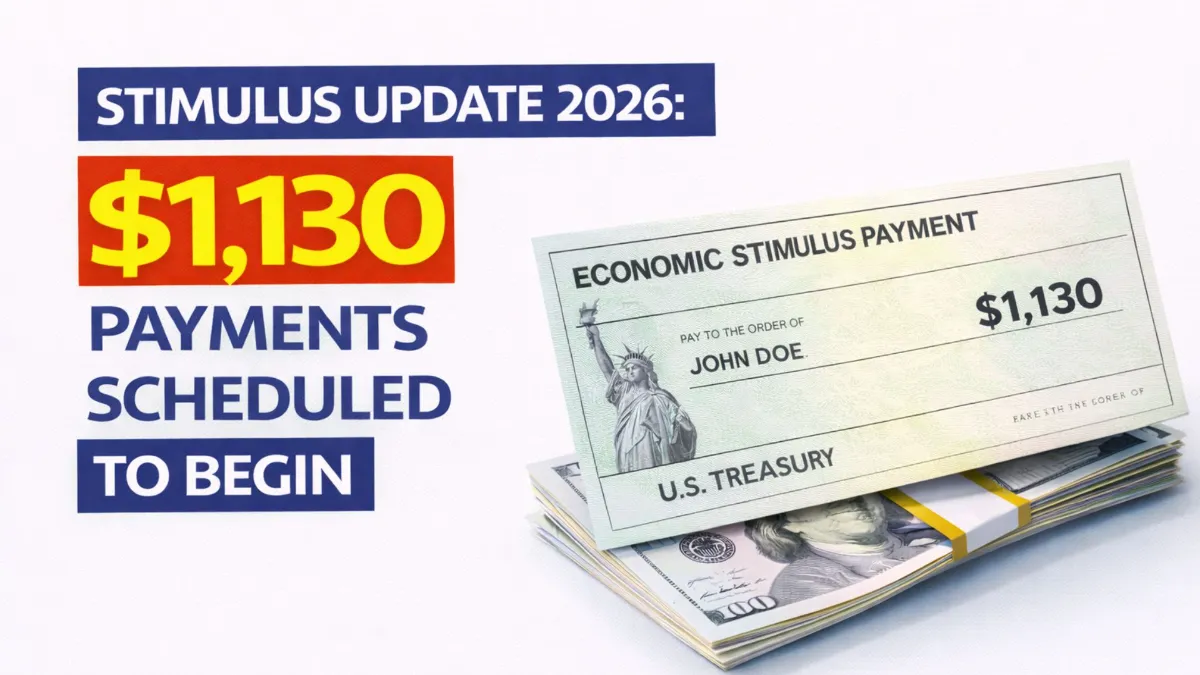
Many people are searching for news about a possible $1,130 stimulus payment in 2026. The short answer is this: the payment is being discussed as part of economic relief proposals, but it is not officially confirmed yet. If approved, it would likely target low- and middle-income households to help with rising living costs. Start dates, eligibility rules, and payment methods would only be final after a formal government announcement.
Why Is a $1,130 Stimulus Payment Being Talked About?
The idea of a $1,130 stimulus payment is coming up because many families are still feeling financial pressure. Prices of food, rent, fuel, and healthcare remain high, and wages have not increased at the same pace for everyone. Lawmakers and policy experts are discussing new ways to support households if economic growth slows or inflation continues to pinch budgets. A one-time direct payment is seen as a quick way to put money into people’s hands and boost spending in the economy. While similar payments were issued in earlier years, the 2026 proposal is still at the discussion stage and may change in amount or structure.
Expected Start Date and Payment Timeline
Right now, there is no confirmed start date for the $1,130 stimulus payment. If the plan moves forward, it would first need approval through the budget or a special relief bill. After that, government agencies would set a rollout schedule. Based on how earlier stimulus programs worked, payments could begin a few weeks to a couple of months after approval. Direct deposits usually go out first, followed by paper checks or prepaid cards. People are advised to rely only on official announcements, because dates shared on social media are often guesses or outdated information.
Who May Be Eligible for the $1,130 Payment?
Eligibility rules have not been finalized, but discussions suggest they could follow patterns from previous stimulus programs. This means income level, tax filing status, and residency could play a role. In most past cases, people with lower and moderate incomes received the full amount, while higher earners either received a reduced payment or did not qualify. Seniors, people with disabilities, and families with children are often considered priority groups. If approved, the government would clearly publish income limits and other requirements so people can easily check whether they qualify.
How the Payment Could Be Sent to You
If the $1,130 stimulus payment becomes official, the payment method would likely depend on the information already on file with tax authorities or benefit agencies. Most people would receive the money through direct deposit if their bank details are available. Others might get a paper check or a prepaid debit card by mail. To avoid delays, officials usually recommend keeping your address and bank details up to date. No application is typically required for these payments, as eligibility is often checked automatically using tax records.
Possible payment details, if approved, may look like this:
| Detail | Expected Information |
|---|---|
| Payment amount | $1,130 one-time payment |
| Main recipients | Low- and middle-income households |
| Payment methods | Direct deposit, check, or prepaid card |
What You Should Do Right Now
At this stage, the best thing to do is stay informed and be cautious. There is no need to apply or pay anyone to “secure” a stimulus payment, as that is a common scam sign. Keep an eye on official government websites and trusted news sources for updates. Make sure your tax filings are up to date, because past stimulus payments were based on recent tax returns. If the $1,130 stimulus payment for 2026 is approved, clear instructions, eligibility rules, and exact dates will be shared publicly. Until then, treat any fixed dates or guarantees you see online with care and patience.