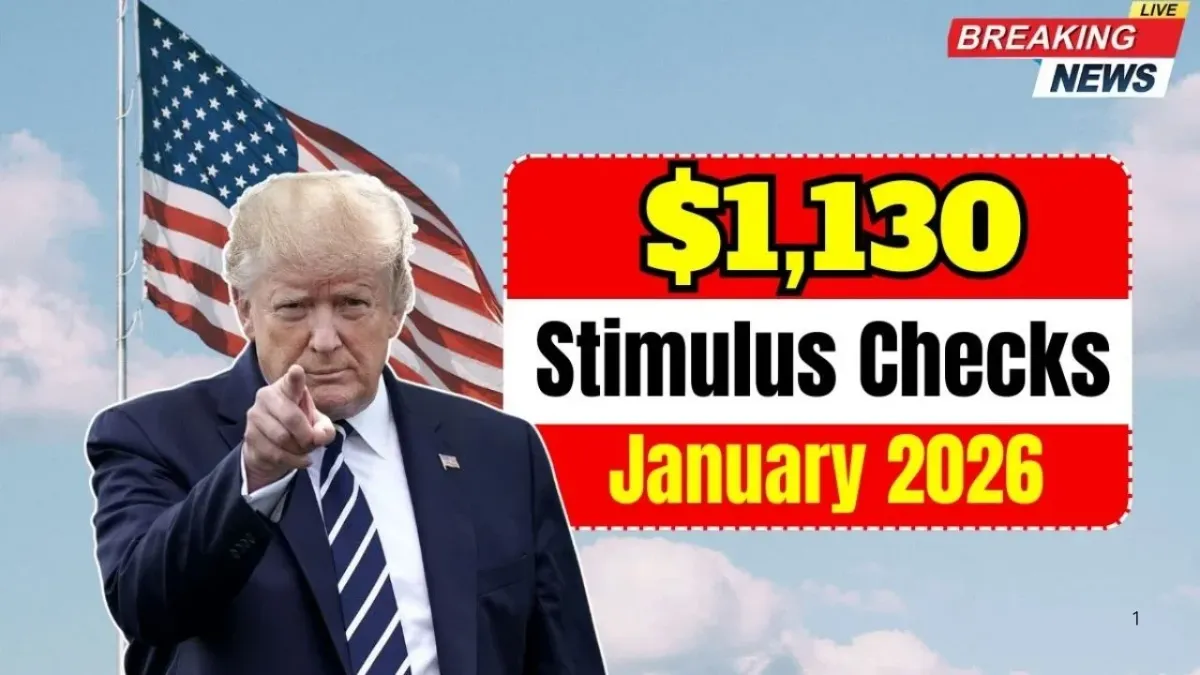
Many people are talking about stimulus payments and refund programs in the United States as we move into 2026. One headline that’s been shared online is about a $1,130 payment. But is this really a new federal stimulus check? The simple answer is: No major new federal stimulus payment of $1,130 has been officially approved for all Americans by the IRS or Congress. What is real, though, are some state-level refund programs that pay money back to residents of specific states — including amounts up to about $1,130. Let’s break down what this means in clear, easy English.
What’s the Truth About Federal Stimulus Checks in 2026
There’s a lot of confusion about “stimulus checks” in 2025 and 2026. Social media posts have claimed new federal payments of $1,000, $1,390, or even $2,000, but the IRS itself says there are no new federal stimulus payments scheduled for 2025–2026. These older types of checks — known from the COVID era — ended after the Recovery Rebate Credit was fully used up. That deadline passed in 2025, and no new nationwide federal stimulus checks have been authorized.
At the federal level, the government is instead focused on regular tax refunds, Social Security, and other benefit programs. So, if you’re expecting a federal $1,130 payment for everyone — that isn’t actually happening.
The Real $1,130 Payments: State Refund Programs
Here’s where the $1,130 figure comes in: some state governments do refund surplus tax money back to residents under specific laws. A good example is Colorado’s Taxpayer’s Bill of Rights (TABOR). Because the state collected more revenue than allowed under its rules, it must give the extra money back. Some Colorado taxpayers have received refunds of up to about $1,130 — with the amount depending on their situation.
This kind of refund isn’t a federal “stimulus check.” It’s part of individual state tax rules that require governments to return excess surplus funds. Colorado isn’t the only state that does this — other states may offer tax rebates or relief programs too.
Who Qualifies for the $1,130 State Payments
If you live in a state with this kind of refund program, you may be wondering who can actually get the money. Eligibility rules vary by state, but here’s how one well-reported program works (for Colorado’s TABOR refund):
- You must have been a full-year resident of the state (for example, lived in Colorado all through the year).
- You must be 18 years or older on a specific date set by the state.
- You must have filed a state income tax return for the relevant year.
Some states also give a flat payment to low-income seniors or people with disabilities who may not have filed a return; in Colorado, that flat amount can be around $1,130 for certain eligible people under a special program tied to the refund law.
Here’s a simple table showing typical eligibility basics for the state refund program linked to the $1,130 figure:
| Eligibility Criteria | What It Means |
|---|---|
| Full-year residency | You lived in the state all year. |
| Age requirement | You must meet the state’s age rules (like 18+). |
| Filed tax return | You submitted your state tax return on time. |
| Special credits | Some low-income or senior residents might get a set amount without a return. |
When These Payments Usually Start
These state refund programs usually pay out once a year, not monthly. For example, refunds tied to 2024 state income taxes may be issued in late 2025 or early 2026, depending on when tax returns are processed.
Federal stimulus checks — like those sent during the COVID-19 pandemic — went out automatically all over the U.S. But state refunds like the TABOR checks depend on state tax filings and specific refund timelines. There is no single federal date for a $1,130 payment because it’s not a federal program.
Be Careful of Scams
Because there’s so much talk about stimulus payments online, the IRS warns that many posts about new federal checks are scams or misinformation. Messages claiming you’ll get hundreds or thousands of dollars can be fake, and scammers use them to try to steal personal or banking information. The IRS says they don’t send unsolicited texts or emails asking for private data to issue a payment.
If you see a message about a new stimulus check worth $1,130 or more, always check official IRS or state tax department websites to confirm before giving out any personal details.
What You Should Know
So in short:
• The federal government is not issuing a new nationwide $1,130 stimulus check in 2026.
• Some state refund programs can send payments up to around $1,130 to qualifying residents.
• Qualification depends on where you live, your tax filing, and state rules.
• Always verify official details and watch out for scams.
If you want to know whether your state has a refund program like this, check your state tax department’s website or ask a tax professional.